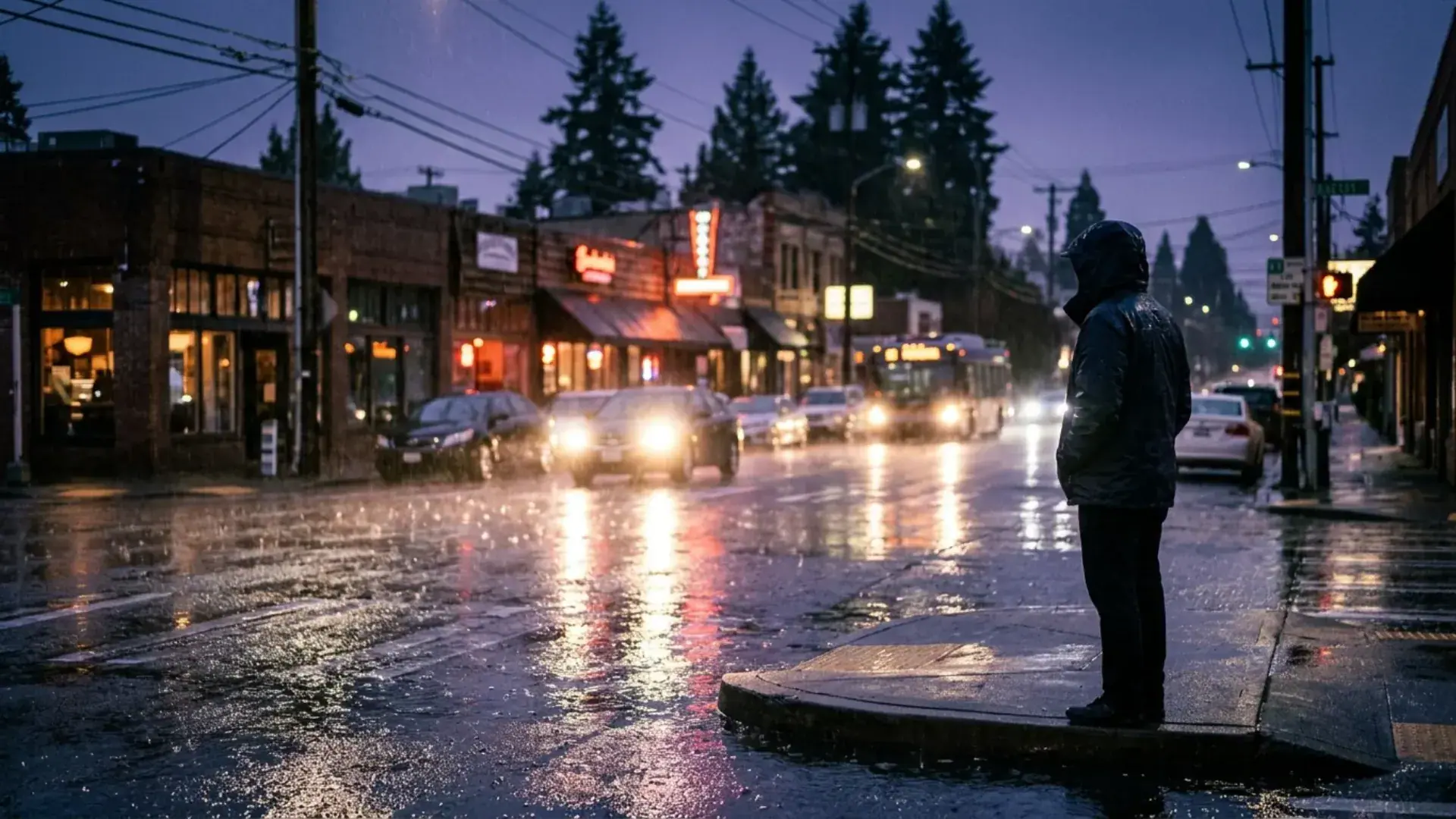
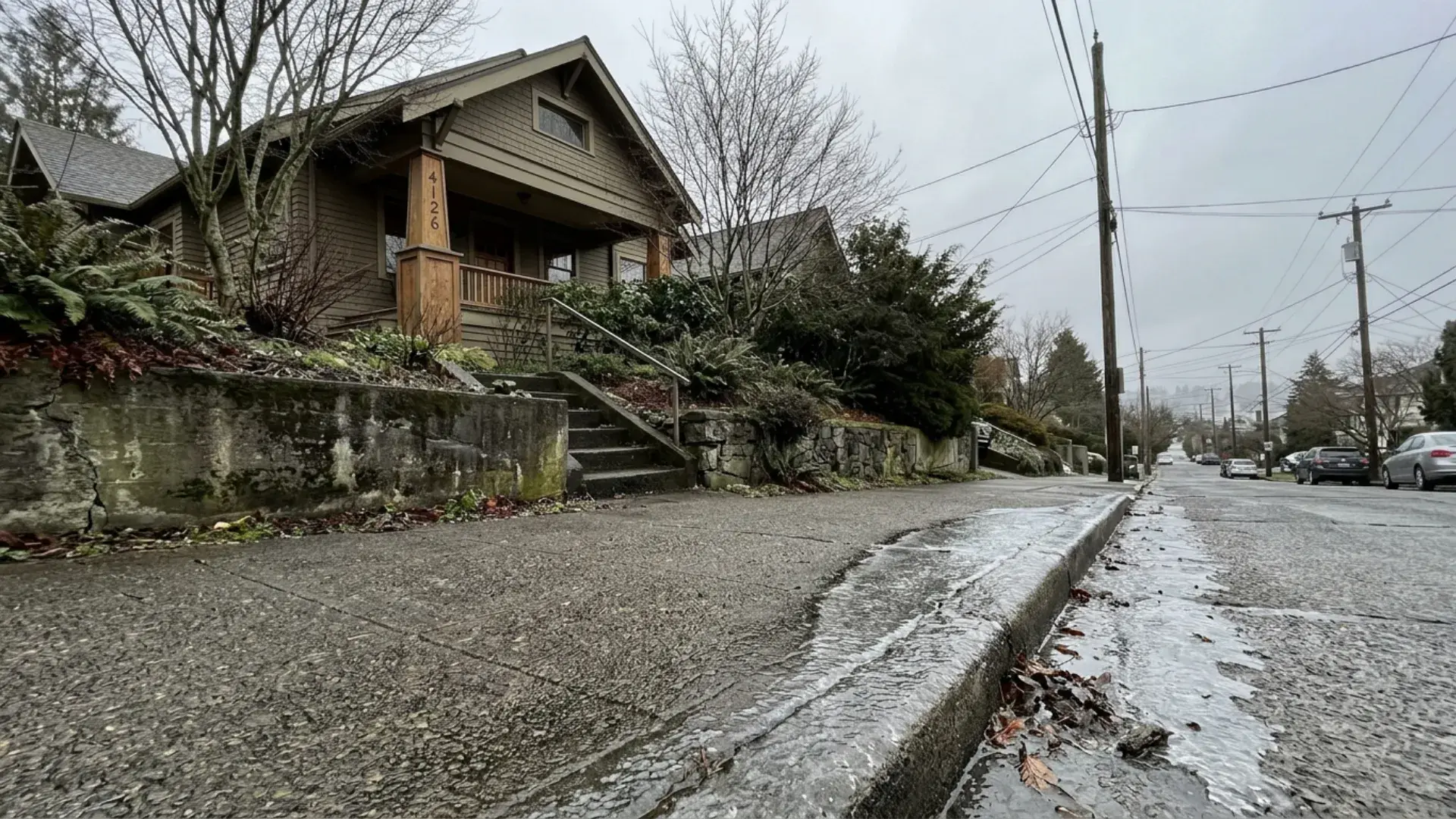
You were heading downhill to the bus, the sidewalk looked wet, and a second later you were on your back staring at the sky. Now your wrist is in a brace and you’re wondering if anyone is actually responsible.
In Seattle, the owner or occupant of the property next to the sidewalk is usually the one responsible for clearing snow and ice, not the city. But where you fell, and how long that ice sat there, changes everything.
Who Is Responsible for Icy Sidewalks in Seattle Under City Law?
Most people I talk to assume the city is on the hook. The sidewalk is public, right? It sits in the city’s right of way. So it feels obvious that the city should pay when it turns into a skating rink.
Seattle doesn’t see it that way.
Why Seattle Puts Sidewalk Ice on the Property Owner, Not the City
Seattle Municipal Code 15.48.010 says the owner or occupant of private property has to remove snow and ice from the sidewalk next to their property in a timely manner. The code also asks them to keep it from becoming icy, ridged or uneven in a way that’s hazardous to people walking by.
So the city owns the concrete, but the neighbor owns the job of clearing it.
That doesn’t mean every fall in front of a house is automatically the owner’s fault. Washington law still asks a basic question: did the owner know, or should they have known, about the ice, and did they have a reasonable chance to deal with it? If you fell at 7 a.m. after snow stopped at 5 a.m., that’s a hard case. If the same frozen ridge had been sitting there for three days while the owner drove past it twice a day, that’s a very different conversation.
Timing is the whole case. Honestly, it’s the first thing I ask about.
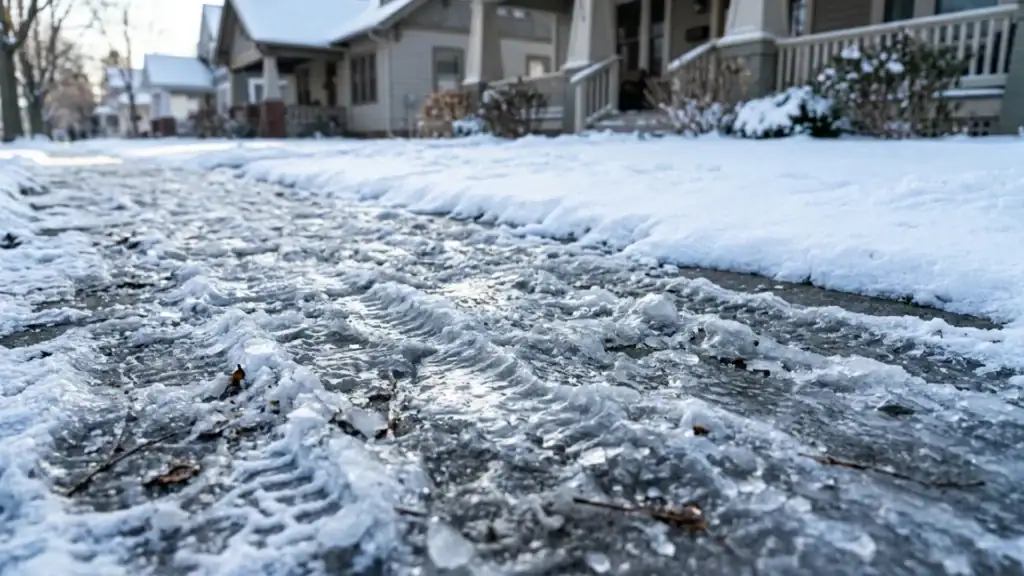
When the City of Seattle Can Still Share the Blame
The city isn’t off the hook everywhere. There are spots with no neighbor next door to blame: curb ramps at intersections, bus stops, public stairways, and paths through city parks. The city can also be responsible when the problem isn’t just weather. Think of a broken drain that keeps flooding the same stretch of sidewalk, which then freezes every cold night.
To hold the city responsible, you generally have to show it knew about the hazard, or should have known, and didn’t act reasonably. That’s harder to prove than most people expect.
And sometimes fault gets split. In one Seattle sidewalk case, the neighboring owner was found 52 percent at fault because a hedge on their property kept the sidewalk slick with moss and algae. Washington lets a jury divide fault between everyone who contributed, which is why we look at every party, not just the obvious one.
Homes, Rentals, Businesses and Bus Stops: Who Pays Depends on Where You Slipped
I won’t say “public sidewalk means city, private property means owner” and stop there. Real falls don’t fit that neatly. So let’s go by location.
Slipping in Front of a House or Rental in West Seattle: Owner or Tenant?
West Seattle has some of the steepest residential streets in the city. Admiral, the hills above Alki, the north facing blocks that never see sun in January. Ice on those slopes can sit for days after the rest of the city has thawed.
If you fell in front of an owner occupied home, the owner is usually the starting point. If it’s a rental, things get interesting. The code says “owner or occupant,” and many leases assign snow and ice removal to the tenant. In practice, we often look at both, and the lease decides a lot.
You’re almost never collecting from your neighbor’s savings account. Homeowners and renters policies usually include liability coverage, and that’s what pays these claims. I bring this up because a lot of people hesitate to call me. They don’t want to “sue the nice lady down the street.” That’s understandable. But in most cases you’re dealing with her insurance company, not her.
Falling at a Store Entrance or Apartment Common Area
Businesses owe a higher level of care to customers than a homeowner owes to someone walking past. A store has to take reasonable steps to find and fix hazards in places customers are expected to walk, like the entrance, the parking lot, and the path from the bus stop to the door.
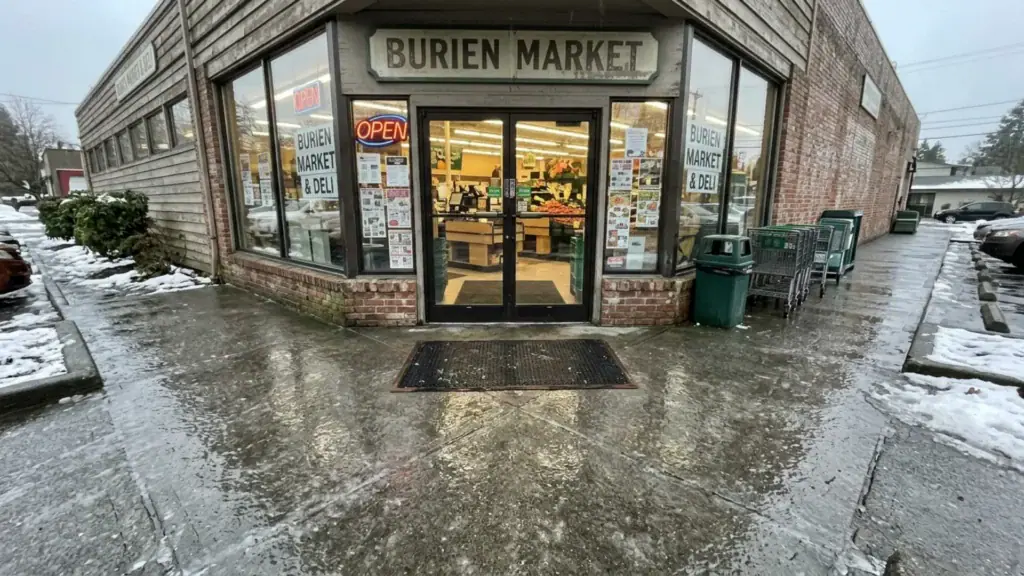
Apartment complexes are similar for common areas. Shared stairs, walkways, and parking lots are the landlord’s responsibility to keep reasonably safe, even when ice forms naturally. Washington courts have rejected the idea that ice is just an “act of God” that nobody has to deal with. If the property owner controls the area and had time to salt it or close it off, they can be responsible.
So if you slipped on the steps outside your own apartment building in White Center or Burien, don’t assume it was just bad luck. It might be a claim.
How to Build a Winter Slip and Fall Claim in Washington Before the Ice Melts
This is the part that frustrates me most. Strong cases get weak because the evidence literally melts. By the time someone calls me a week later, the ice is gone, the owner has salted everything, and it’s their word against yours.
The Evidence That Disappears After the First Thaw
If you can do it safely, or if someone can do it for you, here’s what matters:
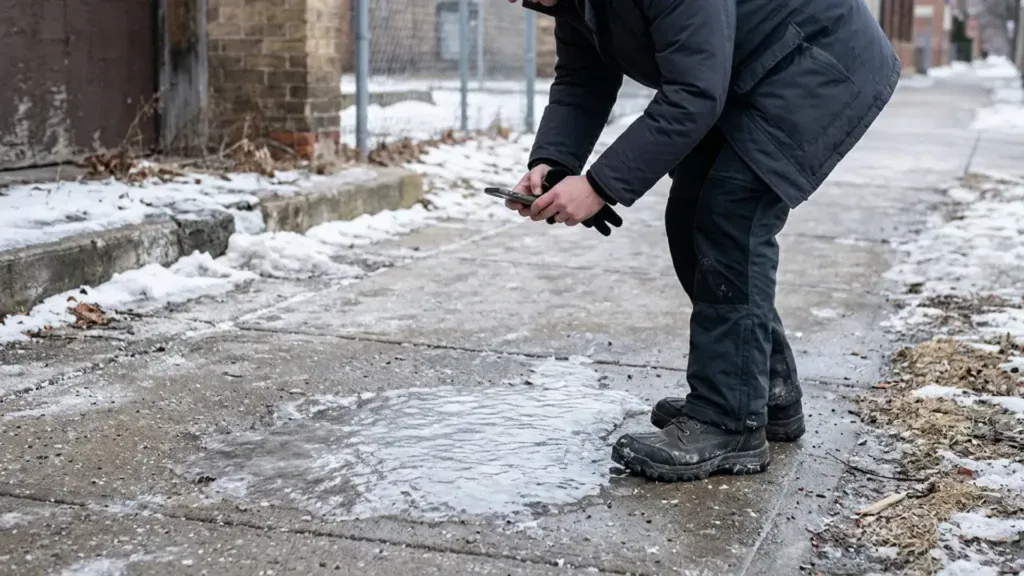
Take photos of the exact spot from close up and from far away. The wide shot should show the house number or storefront so nobody can argue about the location. Get a shot that shows how thick the ice is and whether there’s any salt or sand on it.
Write down the time you fell and what the weather had been doing. Was it snowing that morning, or had the ice been there for days? Public weather records can back this up later, but your own notes help.
Get names and phone numbers from anyone who saw you fall or who came to help. Neighbors who walk that route every day are gold, because they can say how long it had been icy.
Keep the shoes you were wearing. Insurers sometimes argue your footwear caused the fall.
Report the fall in writing to the business or landlord, and keep a copy. Then see a doctor the same day or the next. A gap between the fall and your first medical visit is one of the first things an adjuster will point to.
When you do see the doctor, tell them exactly how you fell. “I slipped on ice on a sidewalk and landed on my right hand” is far more useful in a medical record than “wrist pain.” That one sentence ties your injury to the fall, and it’s written down by someone the insurance company can’t easily dismiss.
My earlier post on what evidence strengthens a personal injury case in West Seattle goes deeper on this if you want the full list.
The Extra Steps a Claim Against the City Requires
Claims against government in Washington follow their own rules. Before you can file a lawsuit against the City of Seattle, you have to file a formal tort claim with the city first. Then there’s a waiting period, currently 60 days under state law, before a lawsuit can be filed. The claim has to include specific details about what happened, where, and what your injuries are.
Get this wrong and you can lose a claim that was otherwise solid. I’ve seen people send a casual email to a city department and think they “reported it”. That’s not the same thing.
You also need to know the general deadline. Most personal injury claims in Washington have to be filed within three years. That sounds like plenty of time, but the evidence clock is much shorter than the legal clock. If you’re still working out what happens when, my guide to the personal injury claim timeline and legal deadlines in Seattle breaks it down.
One last thing. Washington uses comparative fault. If an insurer argues you should have been more careful, that can reduce what you recover, but it doesn’t wipe out your claim. Seeing the ice and walking on it anyway isn’t the end of the story, especially if there was no safe way around it.
Don’t Let the Ice Be the Only Witness That Disappears
So here’s how I’d think about it. Ice falls feel random, but the law around them isn’t. The question is never really “was it icy?” It’s “who was supposed to deal with it, and did they have time?” Once you know where you fell and how long the ice had been sitting there, the answer usually gets clear pretty fast. And if you’re still not sure whether you’re looking at the homeowner, the landlord, a business or the city, that’s exactly the kind of thing I can sort out in one short conversation. Just don’t wait until the ice is the only witness that’s gone.
If you slipped on ice anywhere in Seattle, West Seattle, Burien or the surrounding area, reach out to me directly. I’ll personally review what happened, tell you who is likely responsible, and guide you toward the right representation. You can learn more about how I handle personal injury matters here, or call 253-424-4750. In most cases, that first conversation costs you little or nothing.