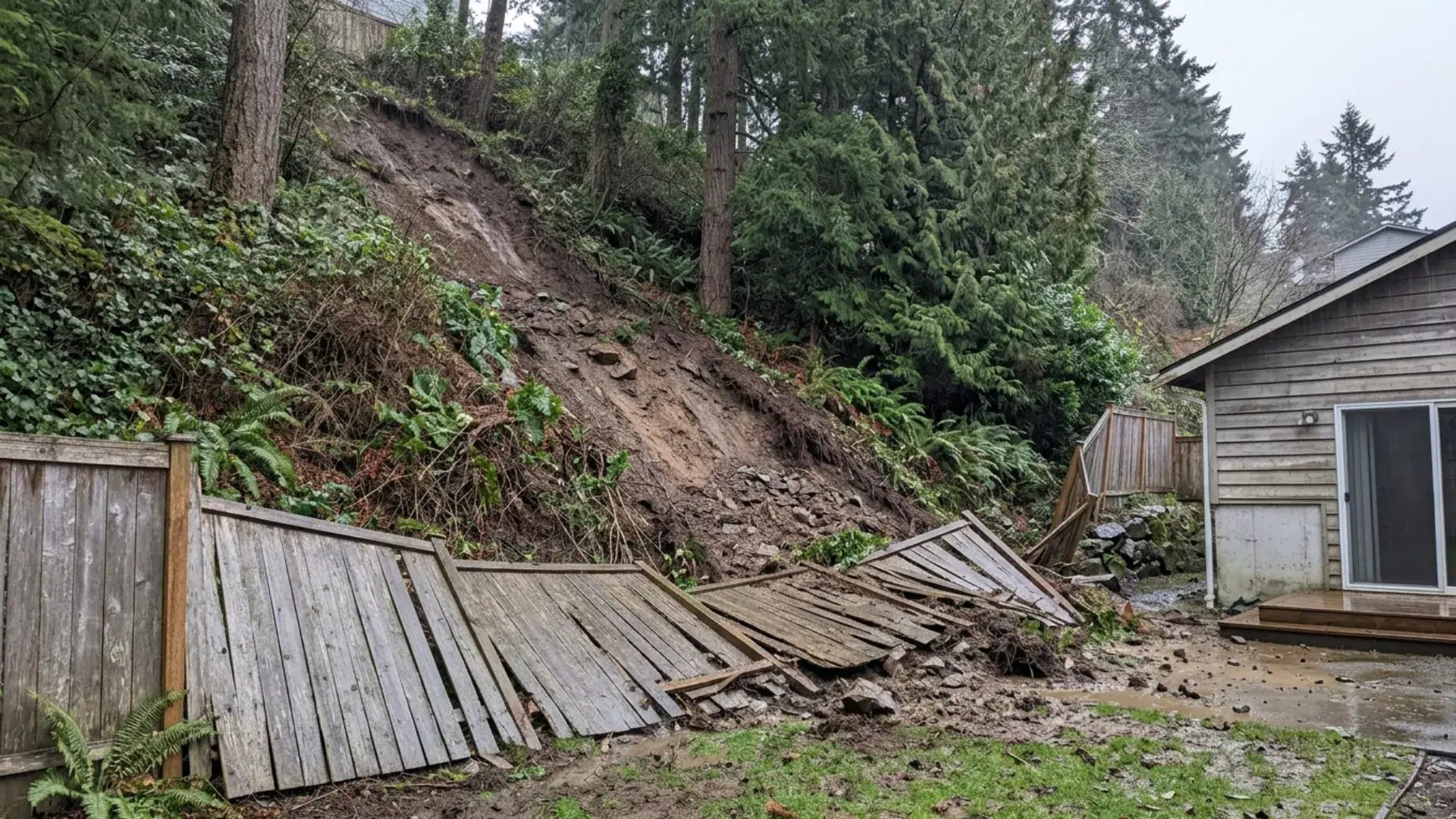
It usually happens at night. Heavy rain for three days, a strange groaning sound, and by morning there’s mud against your back door and a section of fence lying in the yard. Then your insurance company tells you earth movement isn’t covered.
Now the real question hits: is this just bad luck, or did your neighbor cause it? In Washington, each owner usually covers damage on their own land. But that changes when someone else’s actions set the slope moving.
When Is Your Neighbor Liable for a Landslide on Your West Seattle Property?
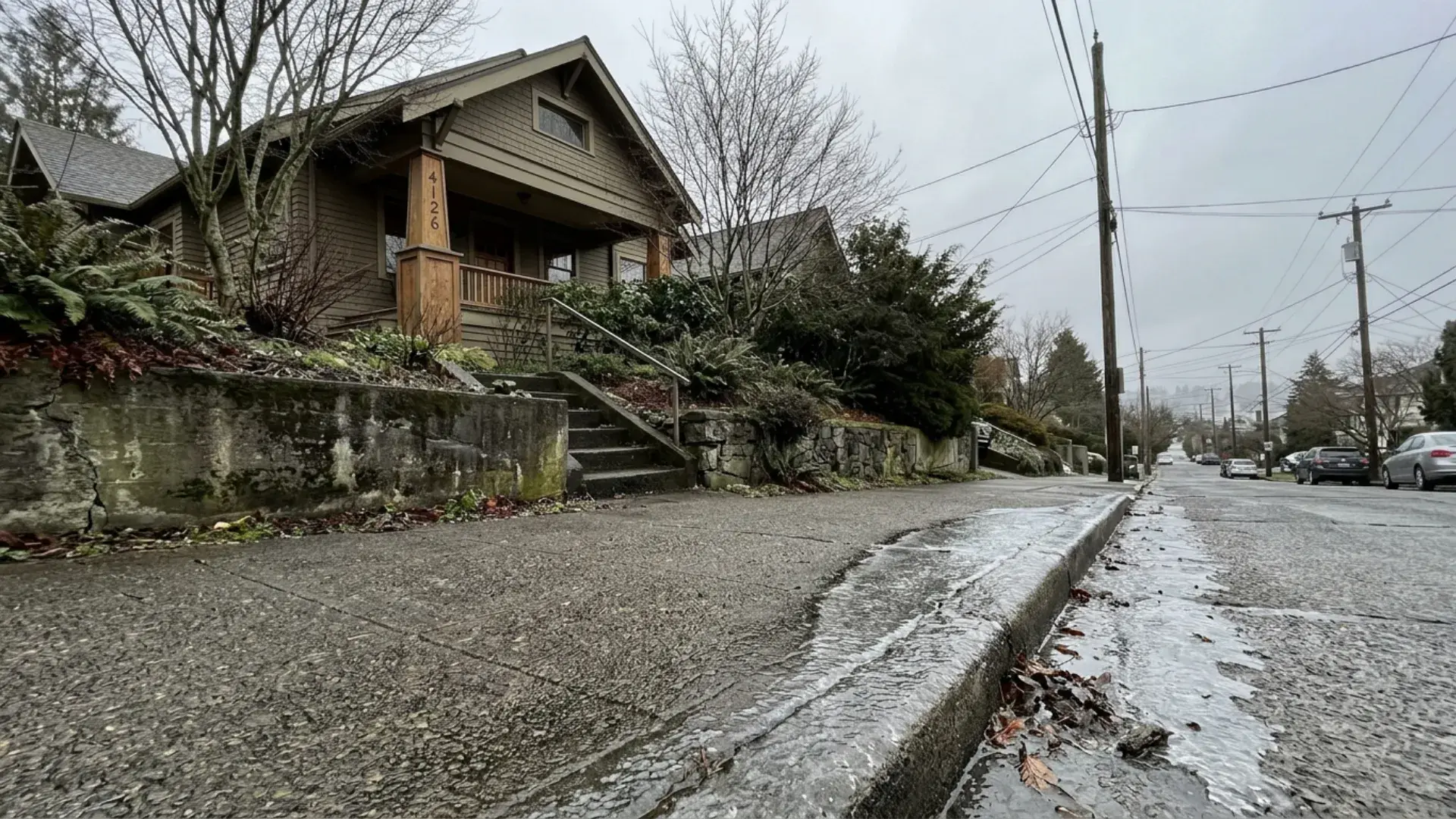
West Seattle has a long history with slides. The winter of 1996 to 1997 brought hundreds of landslides across the city, and West Seattle was near the top of the list. Seattle’s own emergency planners say winter and early spring are when most slides happen, because the soil is saturated and has nowhere left to put the water.
So when your yard moves in January, the timing alone doesn’t tell you much. What matters is why it moved.
Why Seattle Law Starts With Each Owner Covering Their Own Land
The City of Seattle’s own guidance is pretty blunt about this. Private owners are typically responsible for landslide damage on their own property, unless they can show another party is responsible.
Read that second half again. That’s where your case lives or dies.
If the slope above you failed purely because of rain and geology, there’s often no one to hold responsible. That’s hard to hear. But if your neighbor did something that made the slope less stable, the picture changes completely.
It also helps to know whether your street sits in a mapped slide area. Seattle maps steep slopes and known landslide prone areas under its environmentally critical areas rules, and a big share of those areas are zoned for single family homes. Being on the map doesn’t prove anyone did anything wrong. But it does mean the risk was knowable. An owner building, grading or draining water on a mapped slope is expected to take that risk seriously, and the city’s own policy has long said private owners carry responsibility for risks to adjacent property, not just their own.
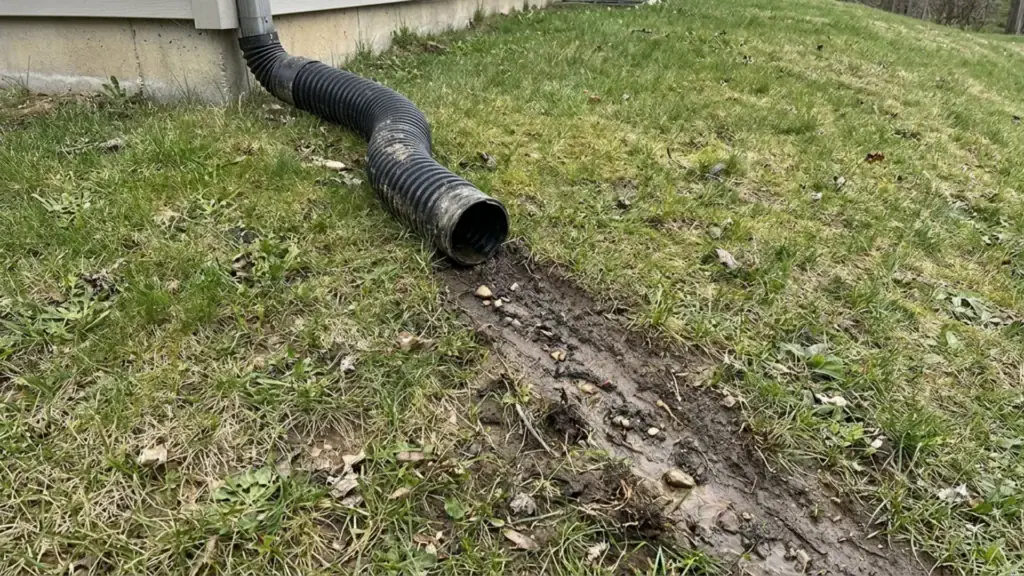
The Neighbor Actions That Shift Liability Uphill: Drainage, Fill and Grading
Before law school I worked as a geotechnical engineer on projects around Puget Sound. A lot of that job was figuring out why slopes fail. And here’s what I learned: in residential neighborhoods, the cause is very often water that somebody put somewhere it shouldn’t be.
These are the things I look for first:
- A downspout or drain line that empties straight onto the slope instead of into a storm drain. Water concentrated in one spot is one of the most common triggers for shallow slides in Seattle.
- Fill dirt or yard waste dumped near the top of a slope. Extra weight on top of saturated soil is a classic recipe for failure.
- Grading or excavation that cut into the toe of a hill, or a new driveway or patio that changed how water runs off.
- A retaining wall built without proper drainage, or one that was already leaning and cracking long before it gave way.
- Cutting large trees on a steep bank. Roots hold soil together, and removing them can change how a slope behaves over the following years.
- Irrigation running on a slope through the wet season.
If your uphill neighbor did any of these, and especially if they knew the slope had moved before, you may have a real claim against them.
How to Prove a Slide Was Not Just Bad Weather
This is where most landslide claims get stuck. Everyone agrees it rained a lot. Everyone agrees the hill came down. The fight is over cause, and that’s an engineering question before it’s a legal one.
What a Geotechnical Report Shows That Photos Cannot
Photos show you the damage. A geotechnical investigation shows you the mechanism. It looks at soil layers, groundwater, where the failure surface started, and how water was moving through the slope. That’s the evidence that can connect a slide to a neighbor’s drainage pipe instead of to the weather.
Here’s what I’d tell any client. Don’t rush out and pay for a full report on day one. I can usually look at what you already have, photos, the city inspection notes, any old reports from when the house was bought, and tell you whether a full engineering study is worth the money. Sometimes it is. Sometimes the facts make it obvious the slope failed on its own, and I’d rather you know that before spending thousands.
Signs the Slope Was Moving Before This Winter
Slopes usually give warnings. Cracks in a driveway that slowly widened. A fence that started leaning a few years ago. Doors that began to stick. Trees with trunks that curve at the base. A retaining wall bulging outward.
If your neighbor saw those signs and did nothing, or made things worse, that knowledge matters. Washington property owners are expected to deal with risks they know about on their own land, especially risks to the people below them. Old emails, conversations with the neighbor, even a listing description from when the house sold can help show what they knew.
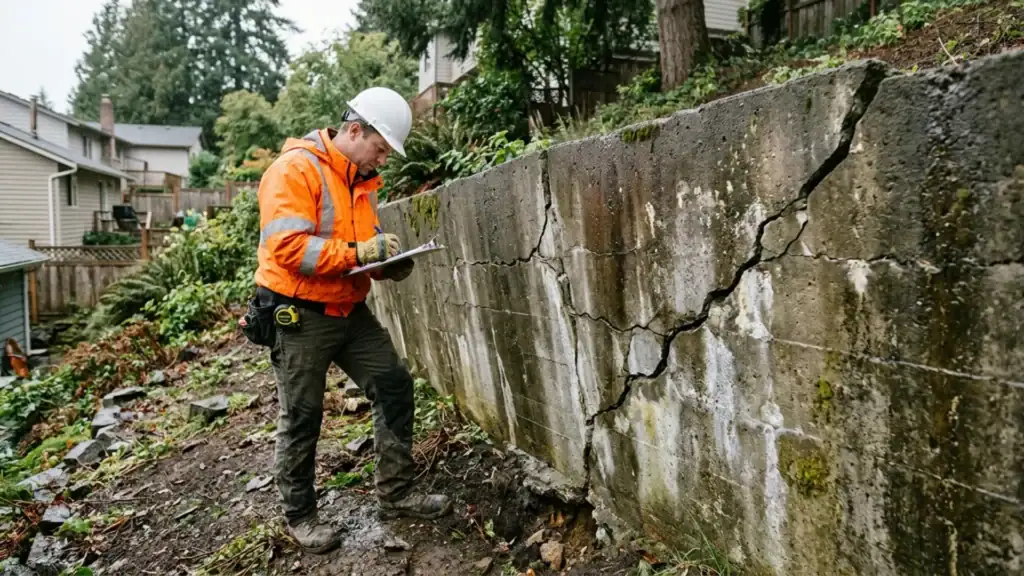
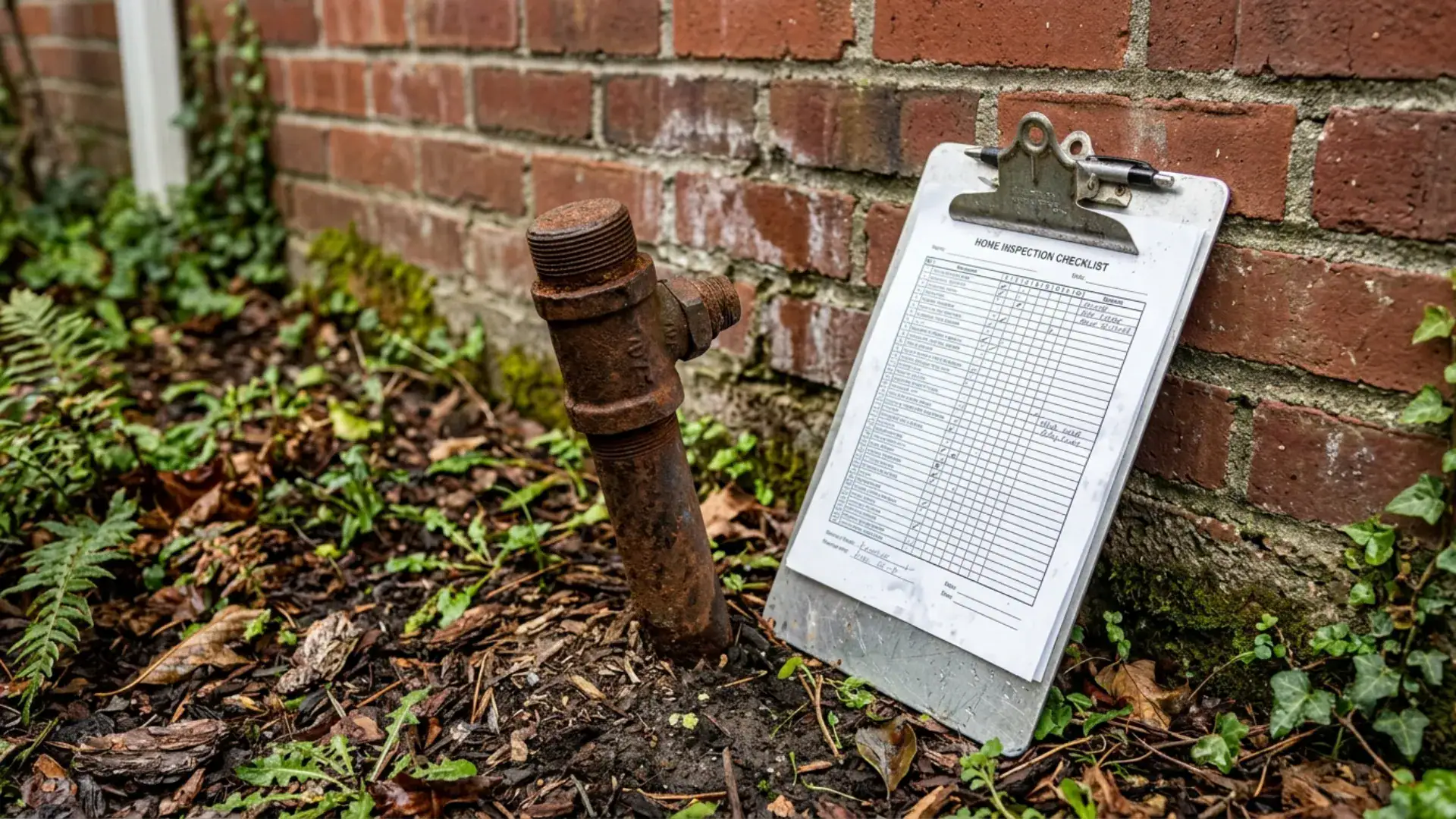
In the first days after a slide, a few things protect both your safety and your claim. If the house itself moved, cracked or lost support, stay out and call the city. Seattle inspects private property damaged by landslides, and that inspection report becomes part of the record. Photograph everything before any cleanup starts: the slide scar, where water was flowing, any pipes or downspouts near the top, the fence lines, and the neighbor’s yard if you can see it from your property. Write down the date and time you first noticed movement and what the weather had been doing that week.
And keep talking to your neighbor, but keep it calm and factual. Say what you saw, not who you think is to blame. Those early conversations often get repeated later, and you want yours to sound reasonable.
Paying for the Damage When Insurance Says No
Let’s talk about money, because that’s what keeps people up at night after a slide.
Why Most Seattle Homeowners Policies Exclude Earth Movement
Standard homeowners policies usually exclude earth movement, which includes landslides and mudflows. Seattle’s own emergency managers have warned residents about this for years. Separate landslide coverage exists, but most people don’t carry it.
There’s one important wrinkle. Some policies cover damage when another covered cause, like a burst pipe, triggers the movement. Read your denial letter closely and don’t assume it’s the final word. And if your neighbor’s actions caused the slide, their liability coverage may respond even when your own policy won’t.
A fallen tree works a bit differently. If a healthy tree comes down in a windstorm, Washington law generally treats that as nature, and your own policy usually handles your damage. But if the tree was dead, rotting, or visibly leaning, and the owner knew or should have known, the owner can be responsible for what it hits.
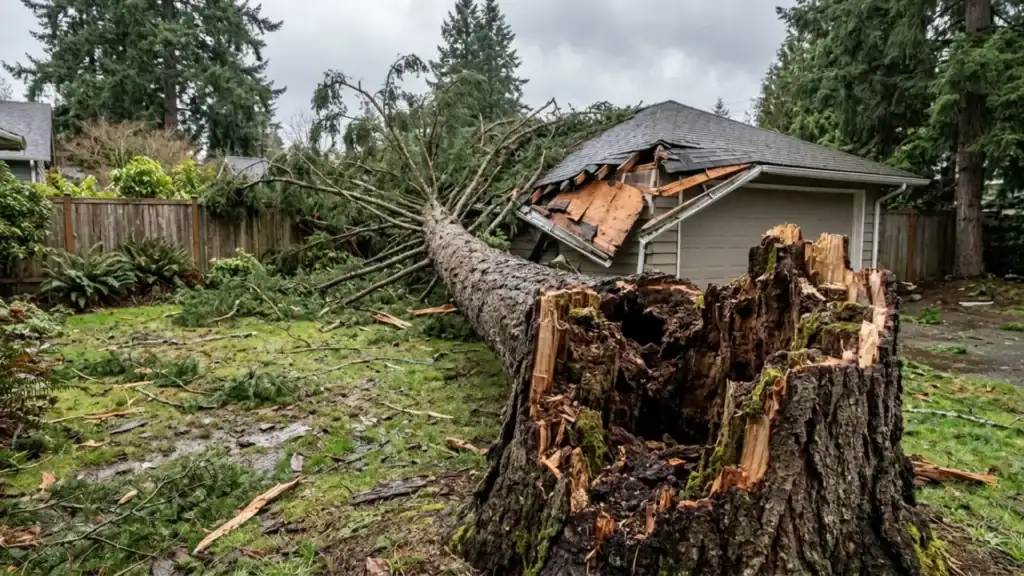
Repair Agreements, Claims and Lawsuits Between Neighbors
Most people don’t want a war with the family next door. I get it. You’ll be living beside them for years.
So I usually start with the least painful path. Often that’s a written agreement about who pays for what: cleanup, stabilization, drainage fixes, and a new retaining wall. Putting it in writing protects both of you, especially if one house sells later.
A good agreement covers more than the check. It says who hires the engineer, who controls the repair design, how drainage will be handled going forward, and who maintains the fix. It also says what happens if the slope moves again next winter. Without those details, you can end up paying for half a retaining wall your neighbor then refuses to maintain.
When the neighbor refuses, or their insurer denies a claim that clearly fits, then a civil claim is the next step. Repair work on steep slopes in Seattle often needs permits under the city’s environmentally critical areas rules, so the legal plan and the repair plan have to line up. One more thing: don’t start major repairs before the cause is documented. Once the evidence is gone, it’s gone.
If Your Neighbor’s Choices Moved the Hill, the Bill May Not Be Yours
Slides feel like acts of nature, and sometimes they are. But on a crowded residential hillside, water rarely ends up in the wrong place by accident. Someone installed that pipe, poured that patio, or ignored that crack. If you can connect the slide to a choice your neighbor made, the cost may not be yours to carry. The hard part is proving it, and that takes someone who understands both the soil and the law. That’s an unusual mix, and it’s exactly why I can be useful when your yard ends up in your basement.
If a slide or fallen tree from a neighbor’s property damaged your home in West Seattle, Burien, Normandy Park or anywhere nearby, contact me directly or call 253-424-4750. I’ll look at what you have and tell you honestly whether there’s a claim. You can read more about my civil disputes practice and my background as an engineer turned attorney. If you’re thinking about buying on a slope, my post on the legal steps West Seattle buyers and sellers skip is worth a read too.